AI training
for your teams.
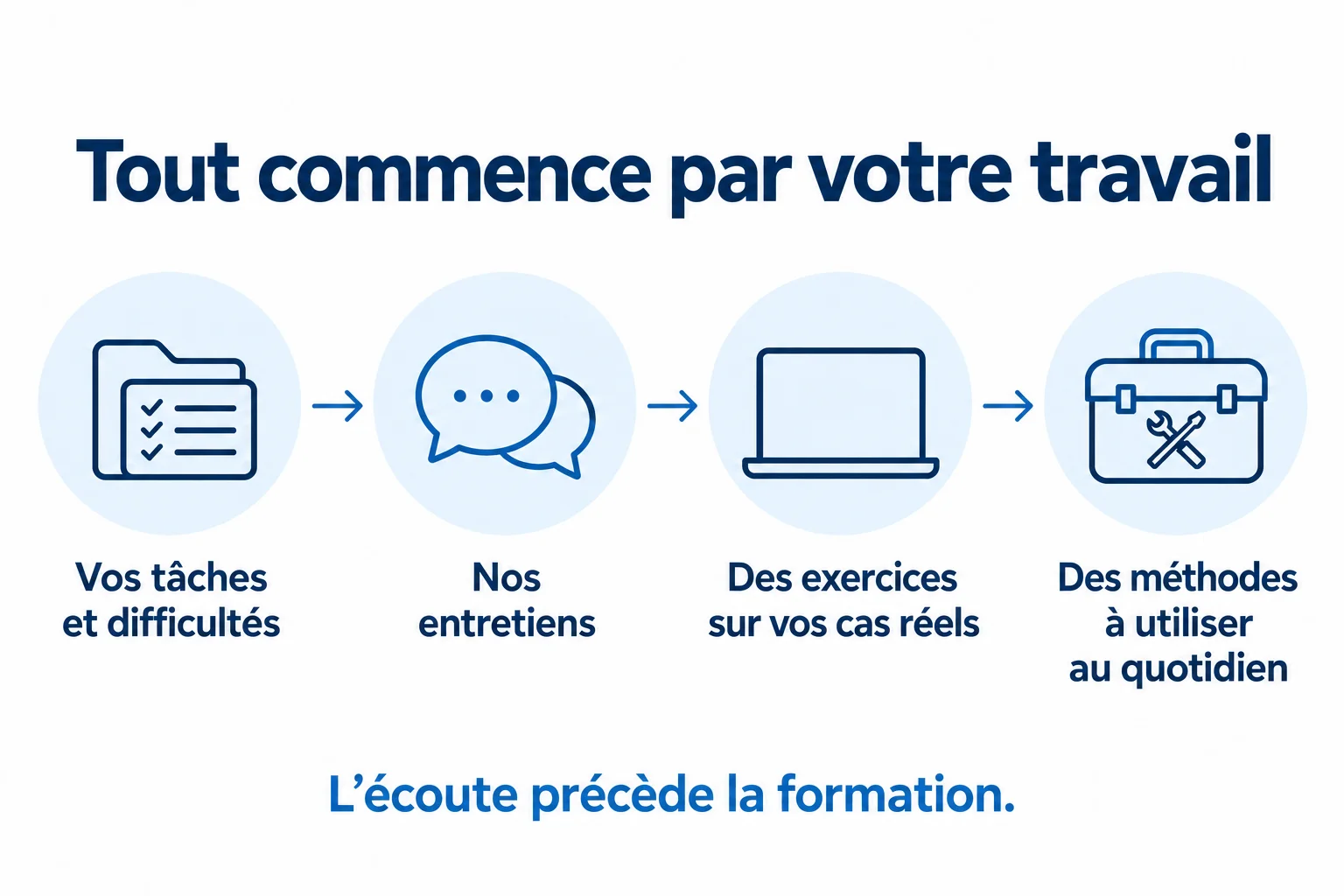
Before we talk to your teams about AI, we listen to them talk about their work.
Through interviews, we identify the real difficulties your employees face, then train them to solve those difficulties with AI, on their own tasks. A second session, built on how they actually use it, makes the new practices stick.
What your teams take away
Everyday use
Every participant leaves with ready-to-use methods applied to their own tasks.
Sound judgement
Your employees know when to trust AI, when to check it, and when to do without it.
Value for the business
Time saved on tedious tasks is reinvested where your teams truly make a difference.
Our difference: we start from your work, not from AI
Interviews before any training
We interview your employees about their work: the repetitive tasks that wear them down, the goals they struggle to reach, what they have already tried, and why it wasn't enough.
That last question makes all the difference. It reveals the real constraint and keeps us from proposing a solution bound to hit the same obstacles.
Why it works better
Ask your teams which uses of AI interest them and they will name the ones everyone talks about, the same in every company. It isn't a lack of imagination. Without knowing the full range of what AI can do, it is impossible to connect it to your own difficulties.
It is also the key to lasting adoption. A tool that solves a real problem gets used every day. A tool that addresses a minor irritant is forgotten within two weeks.
The right answer, not necessarily the flashiest
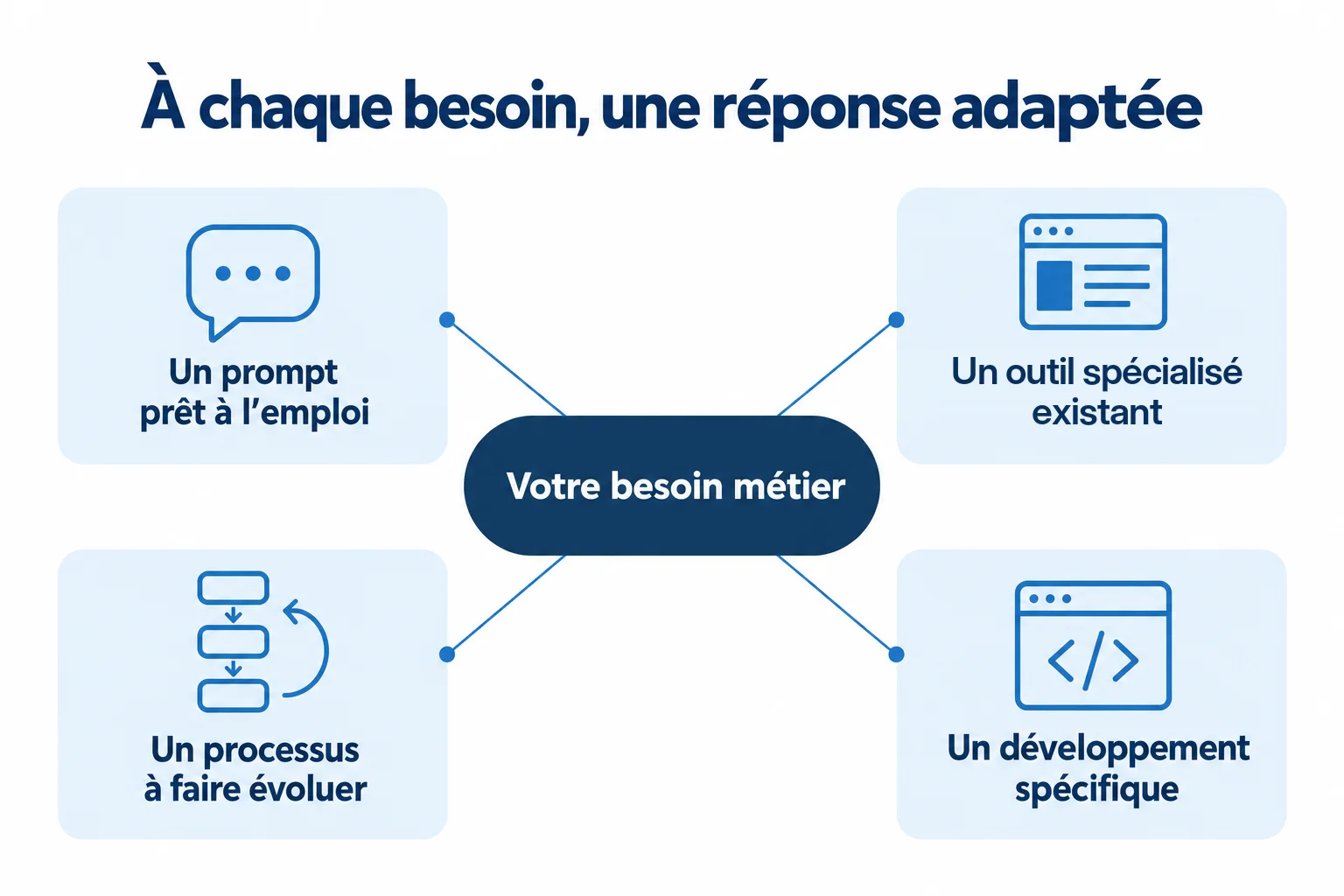
For each difficulty identified, we choose the most relevant solution:
- ready-to-use prompts or skills;
- features within existing specialised tools;
- a process change, when AI isn't the right answer;
- a custom development, when the need justifies it.
The programme
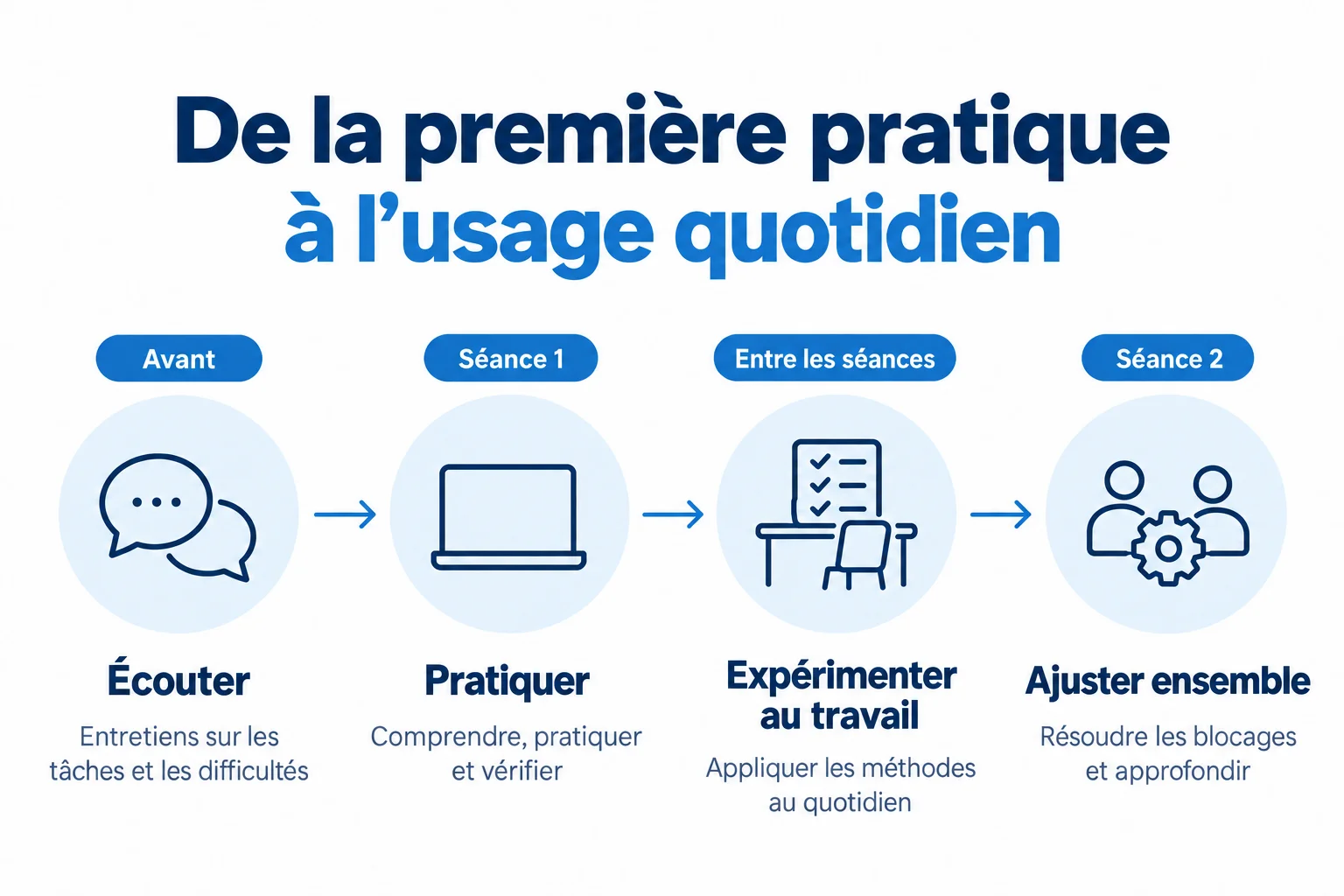
Session 1: from curiosity to practice
-
Understand AI, without jargon or fantasy.
What it can do, what it cannot do, its strengths and its limits. We address fears head-on, with honesty.
-
Master the art of prompting.
Best practices for phrasing requests and getting results that are genuinely usable.
-
Practise on your own tasks.
Individually or in pairs, everyone works on cases drawn from the interviews, at their own pace, supported by our trainers. Step-by-step guides with screenshots and prompts let everyone progress without getting stuck, then find the method again the day they need it.
-
Stay in control.
Know when to use AI and when to hold back, protect data confidentiality, verify information.
-
Share the best work.
At the end of the session, the best outputs are presented to the group, so good practices spread across the whole team.
Session 2: making it stick
The first weeks of use raise new questions and new needs. We come back to talk with your teams and build tailored content to address them. The practice takes hold for good, without fading.
Ready to train your teams?
Let's talk about your teams and their work. We build a training programme that starts from their real tasks.
Take Action